In the bustling heart of Shanghai's financial district, where glass skyscrapers cast long shadows over ancient temples, a quiet revolution is taking place. Junpei Gold, a luxury jewelry brand founded just over a decade ago, has been steadily dismantling the barriers between Eastern mysticism and Western luxury markets. Their secret weapon isn't a revolutionary manufacturing technique or aggressive marketing strategy—it's the ancient Chinese mythical creature known as Pixiu and the humble gourd-shaped bottle called Hulu.
The journey began when founder Li Junpei, a third-generation goldsmith with degrees from both Beijing University and London's Central Saint Martins, noticed a curious gap in the global luxury market. While Western brands freely borrowed Eastern motifs for their designs, authentic Chinese cultural symbols remained largely confined to tourist shops and local markets. The deeper spiritual meanings behind these symbols were getting lost in translation, reduced to mere decorative elements without context or reverence.
Li observed that international consumers showed growing interest in products with stories and spiritual significance, yet the market lacked authentic representations of Chinese cultural symbols that respected their original meanings while making them accessible to global audiences. This realization sparked what would become Junpei Gold's guiding philosophy: to serve as cultural translators rather than cultural appropriators.
The Pixiu, a mythical winged creature believed to attract wealth while preventing its loss, presented both a challenge and opportunity. In traditional Chinese culture, Pixiu possesses a voracious appetite for gold and silver but has no anus, symbolizing that wealth once acquired cannot escape. While powerful in Chinese context, this very characteristic could seem peculiar or even off-putting to international consumers unfamiliar with the mythology.
Junpei Gold's design team, comprising artisans trained in traditional techniques alongside international designers, spent eighteen months reinterpreting the Pixiu. They maintained the creature's essential characteristics—the fierce expression, winged body, and robust stature—while softening some features to make them more universally appealing. The result was a collection that honored the Pixiu's traditional form while making it accessible to those encountering it for the first time.
What truly set their approach apart was the educational component woven into each piece. Rather than simply selling jewelry featuring an exotic creature, Junpei Gold created an entire narrative ecosystem around the Pixiu. Each piece came with a beautifully crafted booklet explaining the mythology, the proper way to "awaken" the Pixiu's powers (according to tradition, by rubbing its eyes), and how to care for the piece as both jewelry and spiritual object.
The Hulu, or gourd, presented a different set of challenges and opportunities. In Chinese culture, the Hulu represents health, longevity, and protection against negative energy. Its shape resembles the mathematical symbol for infinity when laid on its side, creating a natural bridge between Eastern philosophy and universal concepts. The Hulu's simple, elegant form translated beautifully into jewelry designs that felt both exotic and familiar to international consumers.
Junpei Gold's breakthrough came when they positioned the Hulu not just as a symbol of traditional Chinese medicine or folklore, but as a universal emblem of balance and harmony. Their marketing campaigns showed the Hulu alongside other cultural symbols of protection and wellness—from the European four-leaf clover to Middle Eastern hamsa hands—creating a context where the Hulu felt like part of a global language of protective symbols rather than an exclusively Chinese motif.
The brand's international success didn't happen overnight. Early attempts to introduce these symbols in European and American markets met with skepticism. Luxury retailers questioned whether Western consumers would connect with symbols so deeply rooted in Chinese culture. Junpei Gold responded not by diluting the cultural significance, but by deepening the educational aspects and focusing on the universal human desires these symbols represented: prosperity, protection, health, and harmony.
A pivotal moment came when a Junpei Gold Pixiu necklace appeared on a popular American television series worn by a character described as a "shrewd businesswoman who never loses a deal." The subtle placement—without overt explanation of the symbolism—sparked curiosity among viewers who began researching the meaning behind the distinctive creature. Web searches for "Pixiu" spiked by 400% in the week following the episode, and Junpei Gold's international sales increased by 150% in the subsequent quarter.
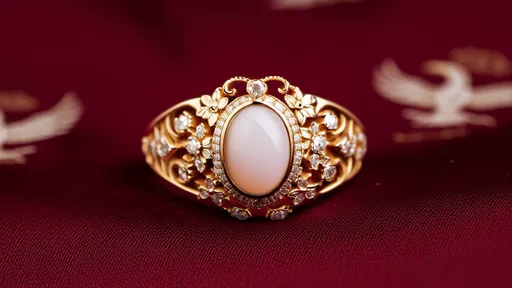
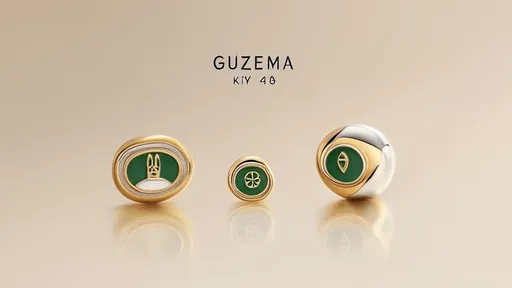
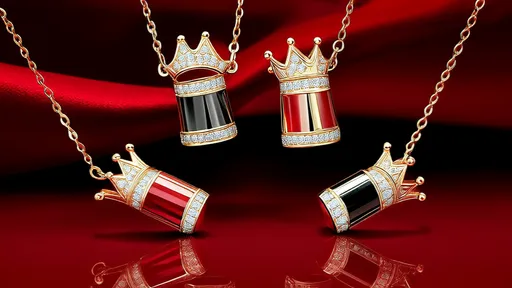
The brand's approach to materials also played a crucial role in their international acceptance. While using traditional 24k gold favored in Chinese markets, they introduced 18k and 14k gold variations with different color tones to suit international preferences. They incorporated diamonds and other gemstones in ways that complemented rather than overwhelmed the cultural symbols, creating pieces that felt simultaneously authentic and adaptable to different aesthetic traditions.
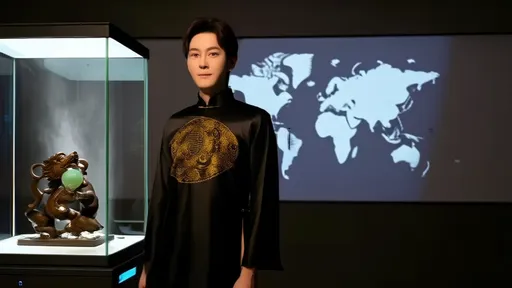
Perhaps the most innovative aspect of Junpei Gold's strategy has been their "cultural bridge" retail concept. Rather than placing their products in existing luxury stores, they created dedicated spaces that function as hybrid gallery-retail environments. These spaces feature museum-quality displays explaining the history and symbolism of Pixiu and Hulu alongside the jewelry collections, with cultural ambassadors trained to explain the significance without resorting to mystical jargon that might alienate skeptical Western consumers.
The educational component extends beyond physical stores to digital platforms. Junpei Gold produced a series of short films featuring cultural historians, art experts, and everyday people from diverse backgrounds discussing what concepts like protection, prosperity, and harmony mean in their respective cultures. These films never explicitly sell jewelry—instead, they create an intellectual and emotional context that makes customers feel they're participating in a cultural exchange rather than merely purchasing a product.
Social media played an unexpected role in the brand's international breakthrough. When Junpei Gold noticed customers sharing stories of "Pixiu working" after wearing their jewelry—getting unexpected promotions, winning contracts, or finding financial solutions—they gently encouraged this organic storytelling while maintaining that the jewelry served primarily as a reminder of one's own capabilities rather than a magical talisman. This balanced approach respected both traditional beliefs and modern skepticism.
The Hulu collection found particular resonance during the global pandemic, as international customers sought symbols of protection and health. Junpei Gold's sensitive marketing focused on the Hulu as a historical symbol of wellness without making exaggerated claims, positioning it as a meaningful accessory during uncertain times. Sales of Hulu pieces increased by 300% in European markets during the peak pandemic months, with many customers reporting they valued the cultural story as much as the aesthetic appeal.
Industry analysts note that Junpei Gold's success represents a broader shift in global luxury consumption. Today's international consumers, particularly millennials and Gen Z, seek products with authentic stories and cultural depth. They're suspicious of superficial cultural borrowing but enthusiastic about genuine cultural exchange. Junpei Gold's respectful yet innovative approach to Chinese cultural symbols has positioned them at the forefront of this movement.
Looking forward, Junpei Gold plans to introduce more Chinese cultural symbols to international audiences, always following their principle of deep cultural understanding combined with thoughtful translation. They're currently developing collections based on the Fenghuang (Chinese phoenix) and Qilin (mythical hooved creature), spending years researching and reinterpreting these symbols before bringing them to market.
The brand's journey demonstrates that in an increasingly globalized world, cultural symbols don't need to be diluted to travel well—they need to be presented with context, respect, and an understanding of universal human concerns. By serving as conscientious cultural ambassadors rather than opportunistic marketers, Junpei Gold has created a new paradigm for how traditional symbols can find relevance and appreciation far beyond their cultural origins.
As Li Junpei reflects on his company's journey from a small Shanghai workshop to international recognition, he emphasizes that their success ultimately stems from a simple principle: people everywhere share fundamental hopes and concerns, and cultural symbols become universally meaningful when they speak to these shared human experiences. The gold that forms their jewelry merely provides the medium—the true value comes from the stories, meanings, and connections these pieces facilitate across cultures and continents.

By /Oct 17, 2025

By /Oct 17, 2025
By /Oct 17, 2025

By /Oct 17, 2025
By /Oct 17, 2025

By /Oct 17, 2025

By /Oct 17, 2025
By /Oct 17, 2025
By /Oct 17, 2025
By /Oct 17, 2025

By /Oct 17, 2025
By /Oct 17, 2025
By /Oct 17, 2025
By /Oct 17, 2025
By /Oct 17, 2025
By /Oct 17, 2025
By /Oct 17, 2025
By /Oct 17, 2025
By /Oct 17, 2025
By /Oct 17, 2025
