In the hushed ateliers of Paris and the bustling workshops of Tokyo, a quiet revolution is unfolding across the pearl industry. For centuries, the perfect spherical pearl reigned supreme, its flawless symmetry representing the pinnacle of luxury and refinement. But today, a new aesthetic is emerging from the depths, one that celebrates imperfection, embraces organic forms, and challenges conventional notions of beauty. The cultured pearl market, long dominated by round specimens, is witnessing a dramatic shift toward baroque and uniquely shaped pearls that are commanding unprecedented prices and capturing the imagination of designers and collectors alike.
The transformation began subtly, almost imperceptibly. Designers working with traditional round pearls found themselves constrained by the geometric limitations of perfect spheres. While beautiful, these pearls dictated rather than collaborated with creative vision. The breakthrough came when visionary jewelers started seeing potential in the irregular pearls that pearl farmers had traditionally considered rejects. These misshapen specimens, once destined for pharmaceutical use or lower-grade jewelry, began to reveal their unique personalities in the hands of artists who could appreciate their distinctive contours and luminous imperfections.
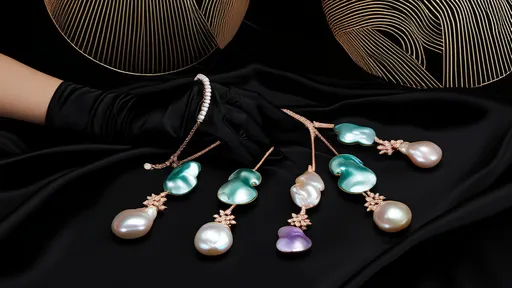
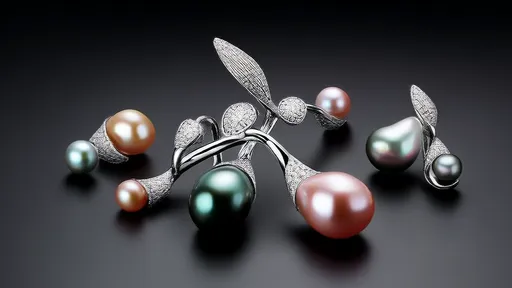
What makes these irregular pearls so compelling is their absolute uniqueness. No two baroque pearls share identical characteristics, making each piece of jewelry truly one-of-a-kind. This inherent exclusivity has become increasingly valuable in an era of mass production, where consumers crave distinctive pieces that reflect their individual style. The organic shapes tell stories of their formation, each contour representing the pearl's journey within the mollusk. Designers are now working with these natural forms rather than against them, creating pieces that feel more like wearable art than traditional jewelry.
The market response has been nothing short of remarkable. Auction houses report that exceptional baroque pearl pieces are achieving prices that rival or even surpass their spherical counterparts. At a recent Christie's auction in Hong Kong, a necklace featuring graduated South Sea baroque pearls sold for nearly double its pre-sale estimate. The piece, described by the auction house as "resembling a cascade of liquid moonlight," captured the imagination of collectors who recognized the artistic potential of the irregular forms.
Contemporary designers are pushing boundaries with these organic materials. Tokyo-based jeweler Mikimoto, whose founder pioneered pearl cultivation, has embraced the trend with their "Promise" collection featuring asymmetrical pearls suspended in minimalist settings. Meanwhile, independent designers like Melanie Georgacopoulos in London are slicing pearls to reveal their inner luminosity, creating textured surfaces that play with light in unexpected ways. These innovative approaches are expanding the vocabulary of pearl jewelry beyond traditional strands and studs.
The technological advancements in pearl cultivation have played a crucial role in this evolution. While traditional pearl farming focused on producing consistently round pearls, progressive farmers are now experimenting with different nucleation techniques and mollusk species to encourage distinctive shapes. Some farmers in French Polynesia are cultivating pearls in specific areas of the oyster to produce teardrop shapes ideal for earrings and pendants. Others in Australia are working with larger oysters to create dramatic, sculptural pearls that become the centerpiece of statement jewelry.
Consumer education has become essential in this shifting landscape. Many buyers still associate value with perfect roundness, requiring jewelers to explain the artistic merit and rarity of exceptional baroque specimens. The most successful retailers are creating immersive experiences that tell the story of each pearl's formation, helping customers appreciate the natural beauty of irregular shapes. This narrative approach transforms the purchasing decision from one based purely on traditional metrics of quality to one informed by artistic appreciation and emotional connection.
Sustainability considerations are also driving the baroque pearl movement. The traditional pursuit of perfect round pearls resulted in significant waste, with irregular specimens often discarded. By finding value in these naturally occurring variations, the industry is moving toward more sustainable practices that honor the entire harvest. This approach resonates strongly with younger consumers who prioritize environmental responsibility in their purchasing decisions. The narrative of embracing natural imperfections aligns perfectly with broader cultural movements toward authenticity and sustainability.
The influence of fashion runways cannot be overstated in popularizing this trend. Major fashion houses including Chanel, Dior, and Gucci have featured baroque pearls in their recent collections, often in unexpected contexts. Designers are pairing the organic shapes with industrial materials, incorporating them into architectural forms, or using them as textural elements in mixed-media pieces. This high-fashion validation has trickled down to mainstream retailers, making irregular pearls accessible to a broader market while maintaining their artistic credibility.
Looking forward, industry experts predict that the market for distinctive pearl shapes will continue to grow, potentially bifurcating into two parallel markets: one for traditional spherical pearls that maintain their classic appeal, and another for artistic pieces featuring baroque and specially cultivated shapes. The latter market is expected to see stronger growth, particularly among younger demographics who value individuality and artistic expression over conventional status symbols.
The very definition of pearl quality is evolving in response to these trends. While luster, surface quality, and nacre thickness remain important, new criteria are emerging that value character, uniqueness, and artistic potential. Some dealers have developed specialized grading systems for baroque pearls that consider factors like balance, visual interest, and how well the shape lends itself to jewelry design. This represents a fundamental shift from viewing pearls as commodities to appreciating them as artistic mediums.
Investment considerations are changing alongside aesthetic preferences. While classic pearl strands have historically held their value well, the most dramatic appreciation is occurring in exceptional pieces featuring unique pearl shapes created by renowned designers. These pieces function as both wearable art and collectible assets, appealing to investors seeking alternatives to traditional markets. The limited supply of truly extraordinary baroque pearls creates natural scarcity that supports price growth, particularly for signed pieces from established artists.
The global nature of this trend reveals interesting regional variations. Asian markets, particularly China and Japan, maintain strong appreciation for traditional round pearls but are increasingly embracing designer pieces featuring irregular shapes. European collectors show particular interest in historical baroque pearls, especially those with provenance from royal collections or important historical periods. American buyers tend to be most receptive to innovative designs that challenge conventional pearl aesthetics, favoring bold, contemporary settings.
Education institutions are adapting their curricula to reflect these market changes. Prestigious jewelry schools like London's Central Saint Martins and New York's Fashion Institute of Technology are incorporating modules on working with irregular pearls, teaching students how to assess their artistic potential and design around their unique characteristics. This represents a significant shift from traditional pearl jewelry courses that focused almost exclusively on stringing techniques for round pearls.
The psychological appeal of irregular pearls speaks to deeper cultural shifts. In an age of digital perfection and manufactured uniformity, organic imperfections feel authentic and human. The asymmetry of baroque pearls mirrors the asymmetry found throughout nature, creating an intuitive connection for wearers seeking jewelry that feels alive rather than manufactured. This emotional resonance may explain why many collectors describe their baroque pearl pieces as having "personality" or "soul," attributes rarely ascribed to perfectly spherical pearls.
Production innovations continue to expand the possibilities. Some farmers are experimenting with shaped nuclei that encourage pearls to form specific contours, while others are manipulating environmental conditions to influence growth patterns. These techniques remain controversial among traditionalists but are gaining acceptance as artists seek specific shapes for their designs. The most successful applications enhance rather than fight the pearl's natural growth tendencies, resulting in pieces that feel both intentional and organic.
As the market matures, specialization is increasing. Some dealers now focus exclusively on particular types of irregular pearls, developing expertise in specific shapes or origins. Museums are beginning to recognize the artistic significance of contemporary pearl jewelry, with institutions like the Victoria and Albert Museum in London and the Museum of Arts and Design in New York acquiring significant pieces for their permanent collections. This institutional recognition further validates the artistic merit of the movement.
The future of pearl jewelry appears to be moving toward greater diversity and artistic freedom. While the timeless elegance of round pearls will always have its place, the growing appreciation for organic forms represents an exciting expansion of the pearl's expressive potential. As designers continue to explore the possibilities and consumers become more educated about the unique qualities of irregular pearls, this trend shows every sign of becoming a permanent and valued segment of the fine jewelry landscape. The revolution that began with embracing imperfections has ultimately enriched the entire industry, proving that sometimes the most beautiful things come in unexpected packages.

By /Oct 17, 2025

By /Oct 17, 2025

By /Oct 17, 2025

By /Oct 17, 2025
By /Oct 17, 2025

By /Oct 17, 2025

By /Oct 17, 2025
By /Oct 17, 2025
By /Oct 17, 2025
By /Oct 17, 2025

By /Oct 17, 2025
By /Oct 17, 2025
By /Oct 17, 2025
By /Oct 17, 2025
By /Oct 17, 2025
By /Oct 17, 2025
By /Oct 17, 2025

By /Oct 17, 2025
By /Oct 17, 2025
By /Oct 17, 2025
