In the ever-evolving world of haute couture, few materials have maintained their relevance and allure as steadfastly as Chanel’s iconic tweed. The 21st century has seen this timeless fabric undergo a series of transformative iterations, blending tradition with cutting-edge innovation. From its humble origins in the Scottish Highlands to its current status as a symbol of Parisian elegance, tweed has been reimagined to meet the demands of modern fashion while preserving its storied heritage.
The story of Chanel’s tweed begins with Gabrielle "Coco" Chanel herself, who first introduced the fabric to women’s fashion in the 1920s. Inspired by the rugged textures of menswear, she softened and refined the material, creating a look that was both sophisticated and effortlessly chic. Over the decades, the House of Chanel has continued to honor this legacy while pushing the boundaries of what tweed can be. The 21st century, in particular, has marked a period of unprecedented experimentation, as designers have embraced new technologies and sustainable practices to redefine the fabric for a new era.
One of the most significant developments in recent years has been the incorporation of unconventional materials into Chanel’s tweed. Traditional wool has been interwoven with unexpected elements such as metallic threads, synthetic fibers, and even recycled plastics. These innovations have not only expanded the visual and tactile possibilities of the fabric but have also aligned with the growing demand for sustainability in fashion. By repurposing materials that would otherwise contribute to environmental waste, Chanel has demonstrated a commitment to eco-conscious design without compromising on luxury.
The process of creating modern tweed is a meticulous one, often involving collaborations between artisans and technologists. At Chanel’s Métiers d’Art ateliers, skilled craftsmen work alongside engineers to develop new weaving techniques that enhance the fabric’s durability and versatility. For instance, laser-cutting technology has been employed to achieve precision in patterns, while advanced dyeing methods ensure vibrant, long-lasting colors. These innovations have allowed tweed to transcend its traditional associations with autumn and winter, making it a viable option for year-round wear.
Another notable trend in the evolution of Chanel tweed is the emphasis on lightweight constructions. Historically, tweed was prized for its warmth and heaviness, but contemporary iterations often prioritize breathability and ease of movement. This shift has been driven in part by changing lifestyles, as modern women seek garments that are as functional as they are fashionable. By blending fine silks and cottons with wool, designers have created tweeds that are supple enough for daytime wear yet elegant enough for evening occasions.
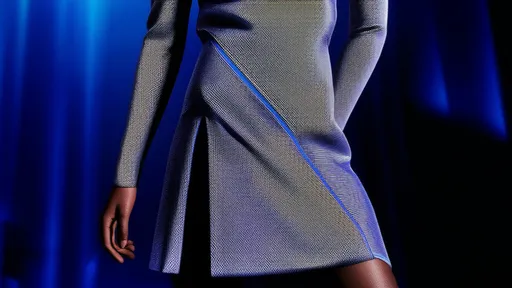
The aesthetic possibilities of 21st-century tweed are equally groundbreaking. Under the creative direction of Virginie Viard, Chanel has introduced bold, graphic patterns that depart from the classic herringbone and checks. Abstract motifs, gradient color transitions, and even digital prints have found their way into the fabric, offering a fresh take on a familiar texture. These designs reflect a broader cultural shift towards individuality and self-expression, proving that tweed can be as avant-garde as it is timeless.
Beyond its visual and tactile appeal, Chanel’s tweed has also become a canvas for storytelling. Recent collections have drawn inspiration from diverse sources, including art, architecture, and global travel. A jacket might feature tweed woven to resemble the brushstrokes of a Impressionist painting, or a skirt might incorporate motifs inspired by Japanese origami. These narrative-driven designs add depth and meaning to the garments, inviting wearers to engage with fashion on an intellectual as well as an emotional level.
Of course, no discussion of Chanel’s tweed would be complete without acknowledging its cultural significance. The fabric has become synonymous with a certain kind of effortless elegance, worn by everyone from Hollywood starlets to political figures. Its adaptability—equally at home on the runway or the streets—speaks to its enduring appeal. In an age of fast fashion and fleeting trends, tweed stands as a testament to the power of craftsmanship and tradition.
Looking ahead, it’s clear that Chanel’s tweed will continue to evolve in exciting and unexpected ways. As the fashion industry grapples with issues of sustainability and inclusivity, tweed’s ability to adapt while retaining its core identity will be more important than ever. Whether through groundbreaking materials, innovative techniques, or bold new designs, the future of tweed is as vibrant as its past. For over a century, Chanel has redefined what this humble fabric can be, and there’s no doubt that the best is yet to come.
By /Aug 1, 2025

By /Aug 1, 2025
By /Aug 1, 2025
By /Aug 1, 2025

By /Aug 1, 2025
By /Aug 1, 2025
By /Aug 1, 2025
By /Aug 1, 2025

By /Aug 1, 2025
By /Aug 1, 2025

By /Aug 1, 2025

By /Aug 1, 2025
By /Aug 1, 2025
By /Aug 1, 2025
By /Aug 1, 2025
By /Aug 1, 2025

By /Aug 1, 2025
By /Aug 1, 2025
By /Aug 1, 2025
By /Aug 1, 2025
