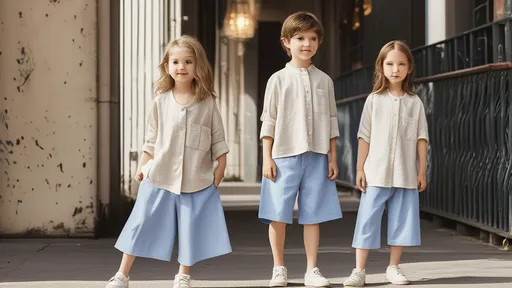
The children's fashion industry is undergoing a quiet revolution. For decades, the sector has been rigidly divided along gender lines—pink frills and princess motifs for girls, blue trucks and dinosaurs for boys. But a growing movement toward gender-neutral clothing is challenging these outdated norms, creating exciting opportunities for brands willing to embrace inclusivity.
Parents today are increasingly rejecting the limitations imposed by traditional gendered clothing. Many cite practical reasons—hand-me-downs between siblings become easier, shopping becomes less stressful when not confined to specific aisles. But the shift runs deeper than convenience. A new generation of caregivers views childhood as a time for exploration and self-discovery, unconstrained by societal expectations about color preferences or interests based on biological sex.
The market potential is substantial. While still a niche segment, gender-neutral children's wear represents one of the fastest-growing categories in apparel. Major retailers have taken notice—Nordstrom introduced its gender-free "Project Supermoon" collection, while Target removed gender-based signage from children's bedding and toy sections. Even legacy brands known for hyper-gendered aesthetics are testing unisex designs.
Designing truly neutral clothing requires more than simply eliminating overtly masculine or feminine elements. The most successful offerings avoid stereotypical color associations while focusing on versatility. Convertible pieces that adjust through growth spurts, reversible jackets, and mix-and-match separates appeal to budget-conscious parents. Organic cotton jumpsuits in earthy tones, striped rugby shirts, and unisex sneakers have emerged as category staples.
Cultural shifts are driving this change. Millennial and Gen Z parents, raised during peak awareness of LGBTQ+ rights and gender diversity issues, are particularly receptive to neutral options. Social media amplifies these values—Instagram feeds showcase toddlers in rainbow overalls or overalls regardless of gender, while parenting blogs debate the developmental benefits of clothing that doesn't limit self-expression.
Educational environments are adapting too. Preschools implementing gender-inclusive policies often request clothing that allows all children equal mobility on playgrounds. Occupational therapists note that restrictive garments (like tight dresses) can hinder physical development, making functional, non-gendered options preferable for growing bodies.
The movement faces resistance from some quarters. Traditionalists argue that gendered clothing helps children understand their identity, while certain retailers hesitate to consolidate previously separate (and profitable) merchandise categories. Some parents worry about confusing their children or facing judgment from relatives attached to conventional norms.
Forward-thinking brands are navigating these challenges through thoughtful marketing. Instead of positioning gender-neutral lines as political statements, they emphasize universal themes: comfort, durability, and joyful self-expression. Packaging features diverse groups of children playing together, avoiding "boys" or "girls" labels while highlighting practical features like stain resistance or expandable waistbands.
Technology enables customization within this space. Several startups offer modular clothing systems where parents can select interchangeable patches or accessories, allowing children to personalize looks without gender constraints. Digital fitting tools help overcome the sizing challenges of unisex garments, which sometimes struggle to accommodate different body proportions.
The environmental angle provides additional momentum. As consumers grow increasingly concerned about waste, the versatility of gender-neutral clothing extends its lifespan. Pieces that work for multiple children across years align with sustainable parenting values. Some brands highlight this by including resale instructions or take-back programs with their neutral collections.
Looking ahead, industry analysts predict this trend will expand beyond basic separates into formalwear and seasonal categories. Holiday outfits that ditch the "prince vs. princess" dichotomy and swimwear focusing on function over gendered aesthetics are already emerging. The most successful designs will likely balance neutrality with playful elements—after all, childhood should celebrate imagination without artificial limits.
This shift represents more than a merchandising strategy. It reflects evolving understandings of childhood development, consumer values, and ultimately, what society permits children to become. As one designer noted: "When we remove the script of who a child should be based on their body, we make room for who they actually are." The retailers who embrace this philosophy may find themselves not just selling clothes, but shaping culture.
By /Aug 1, 2025

By /Aug 1, 2025
By /Aug 1, 2025
By /Aug 1, 2025

By /Aug 1, 2025
By /Aug 1, 2025
By /Aug 1, 2025
By /Aug 1, 2025

By /Aug 1, 2025

By /Aug 1, 2025

By /Aug 1, 2025

By /Aug 1, 2025
By /Aug 1, 2025
By /Aug 1, 2025

By /Aug 1, 2025

By /Aug 1, 2025

By /Aug 1, 2025
By /Aug 1, 2025
By /Aug 1, 2025
By /Aug 1, 2025
