The story of Dr. Martens boots is a tale of rebellion, identity, and cultural evolution. What began as a utilitarian work boot in post-war Germany eventually became a symbol of defiance, adopted by various subcultures across decades. The journey of these iconic boots mirrors the shifting tides of youth movements, musical revolutions, and societal change. From factory floors to punk mosh pits, Dr. Martens have walked through history, leaving an indelible mark on global style and attitude.
In 1945, a German army doctor named Klaus Märtens created a prototype for air-cushioned soles to aid his injured foot. By 1960, the British footwear company R. Griggs Group acquired the patent, anglicizing the name to "Dr. Martens" and producing the now-famous 1460 eight-eye boot. Initially marketed to blue-collar workers and postmen for their durability and comfort, nobody could have predicted how these sturdy boots would soon step far beyond their practical origins.
The late 1960s saw the first cultural shift as skinheads—both the working-class traditionalists and their more radical offshoots—adopted Dr. Martens as part of their uniform. The boots' toughness mirrored the subculture's tough exterior, while their clean lines complemented the sharp mod-inspired fashion. This adoption created the first link between Dr. Martens and youth identity politics, a connection that would only deepen with time.
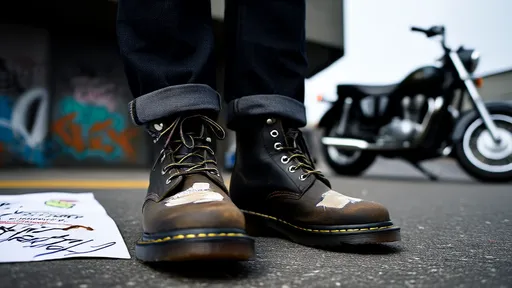
Punk rock's explosion in the mid-1970s catapulted Dr. Martens into the spotlight as the ultimate anti-establishment footwear. Bands like The Clash and Sex Pistols wore them not for comfort but for the statement they made—a middle finger to polished fashion norms. Fans followed suit, customizing their boots with paint, studs, and scratches that told stories of concert bruises and street fights. The boots became living artifacts of rebellion, their scuffs and wear serving as badges of honor rather than signs of deterioration.
As punk splintered into various directions during the 1980s, Dr. Martens found new life in the goth and alternative scenes. The boots' chunky silhouette perfectly complemented the dark romanticism of goth fashion, while their durability suited the rough-and-tumble lifestyle of touring musicians. Bands like The Cure and Siouxsie and the Banshees made them part of their signature look, ensuring the boots' continued relevance as musical styles evolved.
The grunge movement of the early 1990s marked another pivotal chapter. In Seattle's damp streets, Dr. Martens provided practical protection from the elements while visually anchoring the flannel-and-jeans aesthetic. Kurt Cobain's frequent wearing of the boots cemented their status as generational symbols, equally at home in mosh pits and on magazine covers. This era saw Dr. Martens achieve mainstream popularity while paradoxically maintaining their countercultural credibility.
By the late 1990s, Dr. Martens faced an identity crisis as corporate ownership changes and shifting fashion trends led to declining sales. The boots had become victims of their own success—too widely adopted to feel subversive, yet too associated with rebellion to fit neatly into mainstream fashion. Production moved overseas, quality suffered, and for a time, it seemed the brand might fade into nostalgia.
The 2010s brought an unexpected renaissance as new generations discovered Dr. Martens through vintage clothing and musical influences. Contemporary subcultures from streetwear enthusiasts to feminist punks reclaimed the boots, appreciating both their history and their timeless design. The brand smartly capitalized on this revival by reissuing classic styles while collaborating with cutting-edge designers, striking a delicate balance between heritage and innovation.
Today, Dr. Martens exist in a fascinating cultural space—simultaneously symbols of rebellion and mass-market staples. You're as likely to see them on a fashion runway as in a underground club, on the feet of teenagers and their grandparents alike. This duality speaks to the boots' unique ability to absorb meaning from whoever wears them while retaining their essential character. The scuffs and creases that develop over time become personal narratives, continuing the tradition of Dr. Martens as more than footwear but as companions through life's journeys.
From German hospitals to London streets, from punk squats to high fashion, Dr. Martens have traveled an extraordinary path. Their story reflects how objects can transcend their material form to become vessels for identity, resistance, and self-expression. As long as there are youth cultures seeking to define themselves against the mainstream, there will be Dr. Martens boots—worn in, broken in, and lived in—marching forward into whatever comes next.

By /Aug 1, 2025

By /Aug 1, 2025

By /Aug 1, 2025

By /Aug 1, 2025

By /Aug 1, 2025

By /Aug 1, 2025

By /Aug 1, 2025

By /Aug 1, 2025

By /Aug 1, 2025

By /Aug 1, 2025

By /Aug 1, 2025

By /Aug 1, 2025

By /Aug 1, 2025
By /Aug 1, 2025

By /Aug 1, 2025

By /Aug 1, 2025

By /Aug 1, 2025

By /Aug 1, 2025

By /Aug 1, 2025

By /Aug 1, 2025
