The global e-commerce landscape is undergoing a subtle yet profound transformation as Chinese brands increasingly leverage their rich cultural heritage to create distinctive visual identities. Eastern aesthetics, with its millennia-old traditions and contemporary reinterpretations, has emerged as a powerful differentiator in the crowded digital marketplace.
At the heart of this movement lies a delicate balance between ancient philosophy and modern technology. Traditional Chinese concepts like "negative space" in painting, "asymmetrical balance" in composition, and "harmony between humanity and nature" are finding new expression through digital interfaces. Major platforms like Tmall and JD.com have witnessed successful brand campaigns that employ these principles to create emotionally resonant shopping experiences.
One cannot discuss Eastern aesthetics in e-commerce without acknowledging the pivotal role of color theory. Where Western brands often favor bold, high-contrast palettes, Chinese e-commerce visuals frequently employ subtle gradients inspired by natural phenomena - the soft pink of peach blossoms at dawn, the celadon green of ancient porcelain, or the ink-wash gray of scholar's stones. These hues carry cultural connotations that immediately connect with domestic consumers while offering international audiences a fresh visual language.
The concept of "Jian Dan" (simplicity) has become particularly influential in premium product displays. Unlike the maximalist approach common in Western e-commerce, Chinese luxury brands increasingly adopt clean layouts with generous white space - a digital interpretation of the Taoist principle that "less is more." This aesthetic approach not only elevates product presentation but also creates a sense of exclusivity and refinement.
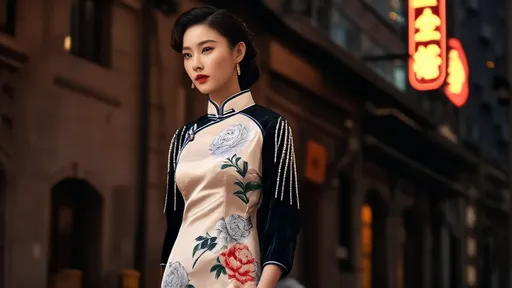
Scroll through any major Chinese e-commerce platform during festival seasons, and you'll witness how traditional motifs undergo digital metamorphosis. The once-static patterns of cloud scrolls, peony blossoms, and dragon scales now animate subtly as users hover over products. These motion designs don't merely decorate; they tell cultural stories that enhance product value and brand heritage.
Typography represents another frontier where Eastern aesthetics shines. While maintaining readability for mass audiences, innovative brands experiment with calligraphic elements and seal script inspirations in their logos and promotional materials. The stroke order and energy flow of Chinese characters often influence the movement and composition of entire webpage designs, creating a uniquely Eastern visual rhythm.
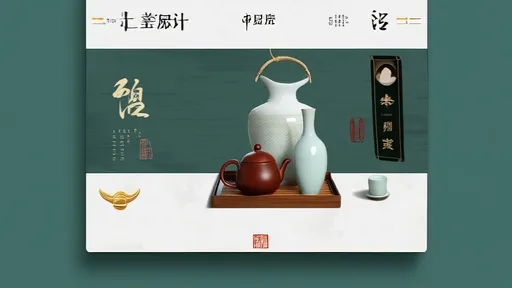
Product photography styles reveal distinct cultural approaches. Where Western e-commerce often isolates products against pure white backgrounds, Chinese platforms frequently incorporate contextual elements - a tea set arranged on a scholar's desk, silk garments draped over a moon gate, or porcelain displayed alongside the raw materials from which they're made. These compositions reflect the holistic worldview inherent in Eastern traditions.
The integration of Eastern aesthetics extends beyond visual surfaces into user experience design. Concepts like "feng shui navigation" - where page layouts follow principles of energy flow - and "four seasons theming" - where interfaces change according to seasonal cycles - create immersive environments that resonate deeply with cultural memory. Even loading animations frequently incorporate elements like spinning copper coins or floating lotuses, turning waiting moments into cultural expressions.
Packaging design in Chinese e-commerce has become a particularly vibrant canvas for Eastern aesthetics. Unboxing experiences now often resemble the opening of traditional scrolls or antique treasure boxes, with each layer revealing products arranged with ceremonial care. This transforms mundane transactions into cultural rituals, dramatically enhancing perceived value and shareability on social media.
Interestingly, the application of Eastern aesthetics isn't limited to traditional product categories. Tech brands selling headphones or smartphones increasingly incorporate design elements inspired by jade carvings or bamboo joints. Makeup palettes arrange colors according to the five-element theory, and sportswear integrates patterns from ancient armor or silk road motifs. This cultural fusion creates products that feel simultaneously innovative and rooted.
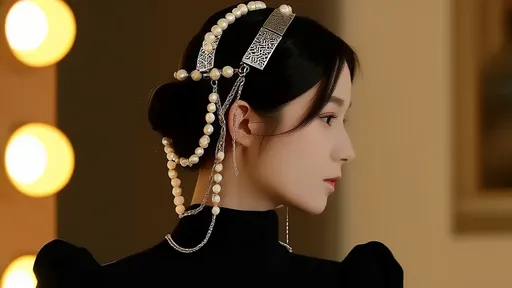
The rise of virtual influencers and digital humans in Chinese e-commerce also reflects Eastern aesthetic values. Unlike their hyper-realistic Western counterparts, many Chinese virtual brand ambassadors exhibit subtle stylization - slightly elongated eyes reminiscent of Tang dynasty paintings, or movements that echo classical dance gestures. These deliberate imperfections create an uncanny valley effect that paradoxically enhances relatability.
Live commerce, a dominant force in China's e-commerce ecosystem, has developed its own aesthetic language deeply informed by Eastern traditions. Hosts often frame products within cultural narratives - presenting a ceramic vase not just as decor but as carrying forward a kiln's centuries-old legacy. The camera work frequently employs compositions borrowed from classical landscape paintings, with products positioned as "scholar's objects" in carefully curated settings.
As sustainability becomes increasingly important, Eastern aesthetics offers natural solutions. The traditional value of "wu jin qi yong" (waste nothing) manifests in e-commerce visuals through upcycled material displays and packaging that transforms into decorative items. Product stories emphasize craftsmanship longevity over disposable trends, aligning with both environmental concerns and cultural pride.
What makes the Eastern aesthetic approach particularly effective in e-commerce is its inherent adaptability. The same philosophical principles that guided ancient garden design - the balance between structured and organic, the importance of journey over destination - now inform user pathways through digital storefronts. This creates shopping experiences that feel less transactional and more like cultural explorations.
Looking forward, as augmented reality and virtual reality technologies mature, we can expect even deeper integrations of Eastern aesthetics. Early experiments include AR filters that overlay classical landscape elements onto real-world environments when viewing furniture, or VR showrooms designed as literati gardens where products appear as natural elements within the composition. These developments suggest a future where e-commerce becomes a medium for cultural transmission as much as commercial exchange.
The global significance of this aesthetic movement cannot be overstated. As Chinese brands expand internationally, they carry this visual language abroad, introducing global consumers to new paradigms of digital beauty. Simultaneously, international brands operating in China increasingly adopt these principles to connect with local audiences. The result is a fascinating cross-pollination that's redefining e-commerce aesthetics worldwide.
Ultimately, the power of Eastern aesthetics in Chinese e-commerce lies in its ability to transform commercial interactions into cultural experiences. In an age of algorithmic personalization and AI-generated content, these human-crafted visual traditions provide authentic connections that resonate across generations. They remind us that behind every click lies a search not just for products, but for meaning, identity, and beauty - needs as ancient as the aesthetics now finding new life in the digital marketplace.
By /Aug 1, 2025

By /Aug 1, 2025
By /Aug 1, 2025
By /Aug 1, 2025
By /Aug 1, 2025
By /Aug 1, 2025
By /Aug 1, 2025
By /Aug 1, 2025

By /Aug 1, 2025
By /Aug 1, 2025
By /Aug 1, 2025

By /Aug 1, 2025
By /Aug 1, 2025
By /Aug 1, 2025
By /Aug 1, 2025
By /Aug 1, 2025

By /Aug 1, 2025
By /Aug 1, 2025
By /Aug 1, 2025
By /Aug 1, 2025
